Master of Science (M.Sc.) in Psychology Program
The Master of Science (M.Sc.) in Psychology program is a postgraduate course designed to provide students with an in-depth understanding of human behavior, mental processes, and psychological assessment. The program blends scientific research, theory, and practice to develop competent professionals capable of applying psychological principles across various fields such as clinical, counseling, educational, organizational, and health psychology.
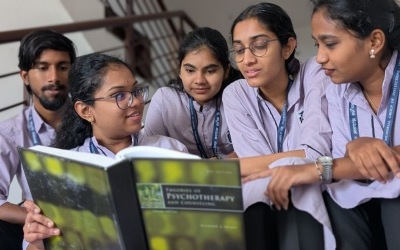
Through advanced coursework, supervised practical training, and research projects, students gain both theoretical and applied knowledge essential for psychological assessment, diagnosis, intervention, and therapy. The program emphasizes the development of scientific thinking, ethical practice, and critical analysis, preparing graduates to address complex psychological issues in individuals and communities.
Graduates of the M.Sc. Psychology program can pursue careers in mental health clinics, hospitals, schools, NGOs, corporate sectors, and research institutions, or continue higher studies and research (such as M.Phil. or Ph.D. in Psychology).
Salient Features
- Comprehensive curriculum covering major areas of psychology.
- Experienced and professionally qualified faculty members.
- Well-equipped psychology laboratory with advanced testing tools.
- Practical training through internships, case studies, and fieldwork.
- Research-oriented learning with dissertation and project work.
- Guest lectures and workshops by mental health professionals.
- Guidance for NET, SET, and other competitive examinations.
- Placement and career counselling support.
Program Educational Objectives (PEOs)
- PEO 1 – Professional Competence and Ethical Practice: To equip graduates with advanced knowledge and skills to pursue successful careers as practicing psychologists, counselors, researchers, or consultants in diverse settings such as hospitals, schools, corporations, NGOs, and private practice, adhering to the highest ethical standards as outlined by professional bodies like the Rehabilitation Council of India (RCI) and National Allied Health Professionals Council (NAHPC) for specific specialisations.
- PEO 2 – Application and Problem-Solving: To enable graduates to apply psychological theories, principles, and evidence-based practices to assess, diagnose, and address complex individual, group, and societal issues, fostering mental health, well-being, and inclusive development in the Indian socio-cultural context.
- PEO 3 – Research and Scholarly Inquiry: To cultivate a scientific temperament, enabling graduates to design, conduct, and critically evaluate psychological research. They will contribute to the field by generating new knowledge, publishing scholarly work, and utilising research findings to inform practice and policy.
- PEO 4 – Lifelong Learning and Professional Development: To instil a commitment to continuous learning and professional growth, motivating graduates to stay abreast of emerging trends, engage in supervision, pursue further specialised training or doctoral studies, and adapt to the evolving landscape of psychological science and practice.
- PEO 5 – Effective Communication and Leadership: To develop effective communicators and leaders who can collaborate with diverse populations, advocate for mental health awareness, reduce stigma, and lead multidisciplinary teams to create positive change in communities and organisations.
Program Outcomes (POs)
- PO1: Apply knowledge of Psychology in various fields.
- PO2: Design and conduct qualitative and quantitative research as well as to analyse and interpret data in APA style.
- PO3: Analyse the needs of the society in the field of mental health and design appropriate intervention plans both for individuals and groups.
- PO4: Use and develop Psychometric tools necessary for modern day Indian and global population.
- PO5: Think critically, formulate, analyse and solve complex problems pertaining to the discipline.
- PO6: Have an understanding of professional and ethical responsibility.
- PO7: Communicate effective and efficiently both in research and professional areas.
- PO8: Work in association with other mental health professionals, educators, researchers and trainers and coordinate with them as a team.
- PO9: Understand principles of Psychology and manage projects considering economic, social, medical, cultural and personal factors.
Program Specific Outcomes (PSOs)
- For a Clinical Specialisation:
- PSO 1: Formulate accurate psychodiagnostic impressions and develop comprehensive case formulations for a range of psychological disorders.
- PSO 2: Demonstrate proficiency in core counselling and psychotherapy skills and apply specific therapeutic techniques under appropriate supervision.
- For a Program with an Organisational/Industrial Psychology Specialisation:
- PSO 1: Apply principles of human resource development, talent management, and organisational behaviour to enhance workplace productivity and employee well-being.
- PSO 2: Design and implement effective recruitment, training, and assessment centers within organisational settings.
Contact Us

Dr. Archana Bhat K
HOD, Department of PG Studies and Research in Psychology
Jnana Patha Campus. 60 Feet Road, Kalyana Nagara, Sagara Road, Malligenahalli, Shivamogga-577205
© 2026 KAPMI | Powered by Webschedio