Bachelor of Computer Applications (B.C.A.) Program
The Bachelor of Computer Applications (B.C.A.) program is a three-year undergraduate degree designed to provide students with a strong academic foundation in computer science, information technology, and software development. The program blends theoretical knowledge with practical skills to prepare students for careers in the IT industry, software development, data analytics, and digital innovation.
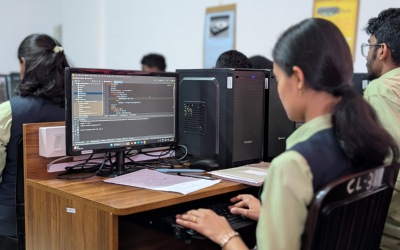
Through a comprehensive curriculum that includes programming languages, database management, web technologies, networking, and system design, the B.C.A. program nurtures creativity, analytical thinking, and problem-solving abilities. It also encourages students to engage in real-world projects, internships, and research activities to gain hands-on industry experience.
The program aims to create skilled IT professionals who can adapt to evolving technologies and contribute effectively to the digital transformation of society.
Salient Features
- Approved by AICTE (All India Council for Technical Education).
- Advanced IT Courses (Advanced Excel, PowerBI, Advanced Python) are provided by MSDC (Manipal Skill Development Center), Manipal.
- Updated curriculum aligned with current IT industry requirements.
- Well-equipped computer laboratories with high-speed internet access.
- Qualified and experienced faculty with expertise in various IT domains.
- Hands-on training in programming, web design, and application development.
- Workshops, seminars, and guest lectures by IT professionals.
- Internship and project opportunities for practical exposure.
- Career guidance for higher studies like MCA, MBA, and competitive exams.
- Placement assistance through the college placement cell.
Program Educational Outcomes (PEOs)
- The B.C.A. Program aims to produce competent IT professionals with a solid foundation in computer science, problem-solving, and technological innovation, preparing them for successful careers and lifelong learning.
- PEO 1 – Academic and Technical Foundation: To provide students with a comprehensive understanding of computer science, programming, and information technology principles.
- PEO 2 – Professional Competence: To develop the technical and analytical skills necessary to design, develop, and manage software and information systems.
- PEO 3 – Innovation and Research Orientation: To foster creativity, critical thinking, and research aptitude in solving real-world computing and technological challenges.
- PEO 4 – Ethical and Social Responsibility: To inculcate professional ethics, teamwork, and a sense of responsibility towards society and sustainable technological development.
- PEO 5 – Lifelong Learning and Employability: To encourage graduates to continuously upgrade their skills and knowledge in response to the rapidly changing IT landscape.
Program Outcomes (POs)
- PO 1 – Computing Knowledge: Apply knowledge of computer science, mathematics, and management principles to solve computing problems.
- PO 2 – Problem Analysis: Identify, analyse, and formulate solutions to complex computing issues using appropriate tools and methodologies.
- PO 3 – Design and Development of Solutions: Design and implement software applications and systems that meet user needs and functional requirements.
- PO 4 – Modern Tool Usage: Select and apply modern computing tools, programming environments, and software development platforms effectively.
- PO 5 – Ethics and Professional Practice: Understand professional, ethical, and legal responsibilities in the use of technology and data.
- PO 6 – Communication Skills: Communicate effectively on technical topics through reports, presentations, and teamwork.
- PO 7 – Individual and Team Work: Work efficiently as an individual and as part of multidisciplinary teams in software and IT environments.
- PO 8 – Environment and Sustainability: Recognize the societal and environmental impact of computing solutions and promote sustainable technology use.
- PO 9 – Lifelong Learning: Engage in continuous learning and professional development to keep pace with technological advancements.
- PO 10 – Project Management and Finance: Demonstrate understanding of management and financial principles in project planning and software development.
Program Specific Outcomes (PSOs)
- PSO 1 – Software Development Skills: Apply programming concepts, algorithms, and data structures to design and develop effective software solutions.
- PSO 2 – Database and Networking Proficiency: Demonstrate proficiency in database management, networking, and system administration for IT operations.
- PSO 3 – Web and Application Development: Design and deploy dynamic web and mobile applications using modern technologies and frameworks.
- PSO 4 – Analytical and Problem-Solving Ability: Analyse real-world problems and implement computational solutions using appropriate tools and technologies.
- PSO 5 – Professional Readiness and Ethics: Exhibit professionalism, ethical responsibility, and adaptability for successful employment or entrepreneurship in the IT sector.
Contact Us

Mr. Mangesh S Pai
HOD, Department of B.C.A.
Jnana Patha Campus. 60 Feet Road, Kalyana Nagara, Sagara Road, Malligenahalli, Shivamogga-577205